You’ve done the hard work.
You showed up at the networking event. You collected cards. You sent the follow-up. You stayed in touch through birthdays, holidays, and handwritten notes. You built the relationship.
Now here’s where it pays off.
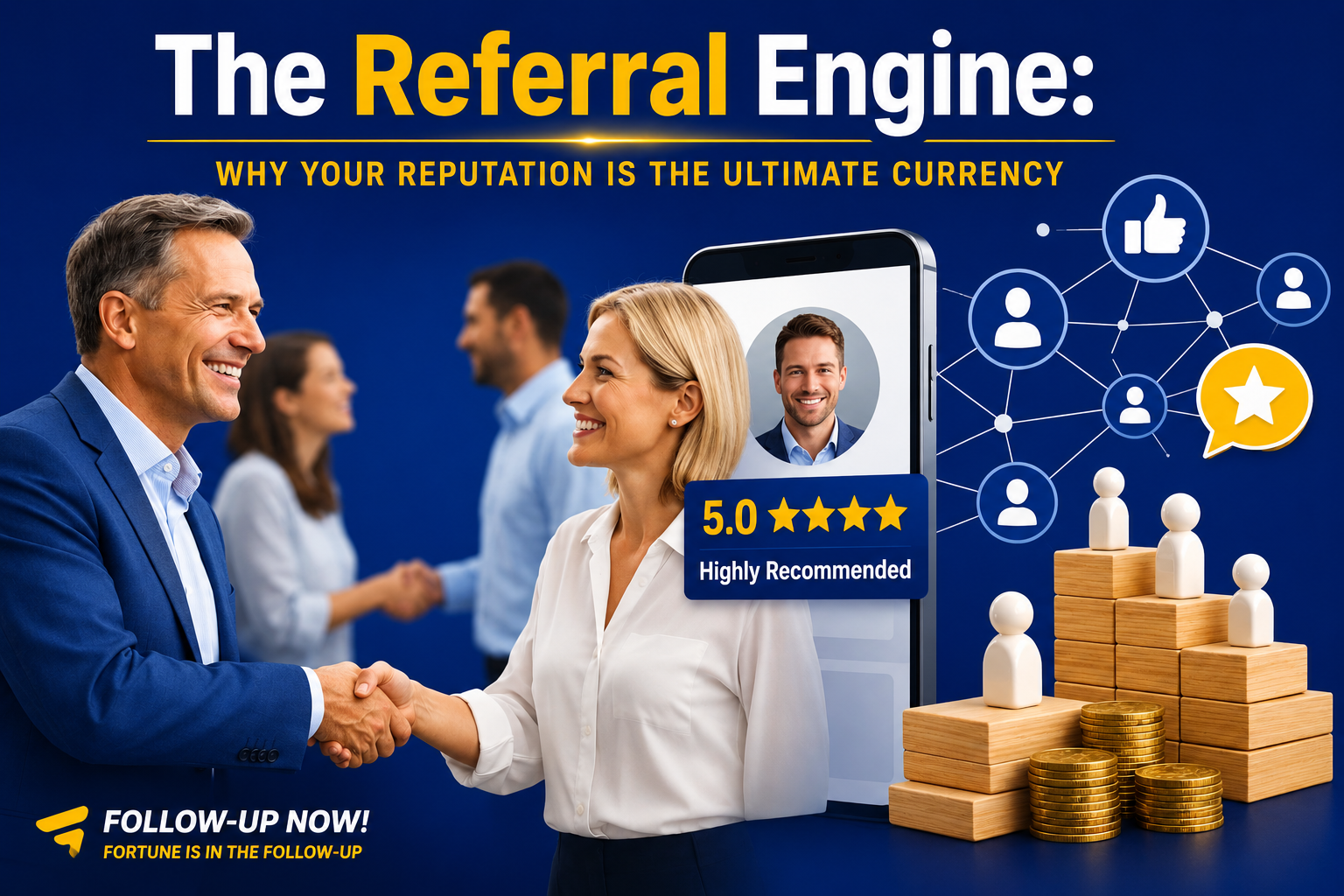
Welcome to the Network Mastery series, The Referral Engine. This is where all that systematic follow-up transforms into something powerful: a self-sustaining loop of high-quality introductions.
But here’s the plot twist most people miss: The secret to getting great referrals isn’t asking for them. It’s giving them first.
Your Reputation Is on the Line Every Single Time
Let’s talk about what’s really at stake when you give a referral.
You’re not just making an introduction. You’re putting your name, your credibility, on the line for two people simultaneously. The person you’re referring AND the person receiving the referral.
If either party drops the ball, guess whose phone stops ringing? Yours.

Think about the last time someone gave you a bad referral. Maybe they connected you with a “great vendor” who ghosted you after the first meeting. Or they introduced you to a potential client who turned out to be a nightmare.
What happened to your opinion of the person who made that introduction? It dropped. Fast.
That’s the referral tax. Every introduction you make either deposits into or withdraws from your reputation account. And unlike your bank account, you can’t just make more deposits to offset bad ones. Reputation compounds slowly and craters quickly.
This is why most professionals play it safe and give zero referrals. They’d rather miss the upside than risk the downside.
But that’s not the play. The play is to become a referral powerhouse, someone known for making high-quality, high-value introductions. The person everyone wants in their network because you’re the connector.
You just need to vet. Ruthlessly.
The Vetting Process: Your Reputation Insurance Policy
Here’s the system for giving referrals that protects everyone involved.
Step 1: Know Their Work
Don’t refer someone based on vibes or a single conversation. You need evidence. Have you seen them deliver? Do you know their work quality? Have you experienced their follow-through firsthand?
If the answer is no, you’re not ready to refer them.
Step 2: Know Their Character
Skills matter. Character matters more. Do they show up on time? Do they do what they say? Are they responsive? Do they treat service staff well? (That last one tells you everything.)
The best referrals aren’t just competent: they’re people you’d trust with your own business.
Step 3: Match the Need
This is where most referrals fall apart. Someone asks for a “good accountant,” and you refer the first accountant in your phone. Wrong.
A startup founder needs a different accountant than a real estate investor. A personal injury attorney needs different marketing than a corporate law firm. Context matters.
Your contact management app should let you filter by expertise, industry, and specific skills so you can make precise matches: not just warm introductions.
Step 4: Set Expectations
Before you make the introduction, have separate conversations with both parties. Tell them what to expect from each other. Clarify the scope. Make sure both sides are actually interested.
Nothing kills your credibility faster than a cold referral where one party had no idea it was coming.
Step 5: Follow Up After
You made the intro. Great. Now check in with both sides separately after a week. How did it go? Did they connect? Was it valuable?
This is where your networking follow up system becomes critical. You’re not just managing your direct relationships: you’re managing the second-degree connections you create.
The Giving Paradox: Why Generous Networkers Win
There’s a counterintuitive truth about referrals: The more you give without asking for anything in return, the more you get back exponentially.
This isn’t karma. It’s math.
When you give someone a quality referral, you create a moment they remember. You solved a problem. You made their life easier. You demonstrated that you understand their needs and have access to solutions.
That memory sticks. And when they meet someone who needs what YOU do? You’re the first call.
But here’s the secret most people miss: You can’t give referrals if you don’t have a deep, organized, well-maintained network. You can’t match people to opportunities if you don’t remember what they do, who they serve, or what they’re looking for.
This is where Parts 1-4 of this series come together.
Part 1 taught you to capture contacts properly after every interaction. Part 2 showed you how to follow up immediately so relationships don’t go cold. Part 3 gave you the system for staying in touch long-term. Part 4 revealed how AI helps you surface the right contact at the right moment.
Now in Part 5, you’re weaponizing all of that follow-up infrastructure to become a referral machine.
How Follow-Up Now Makes You a Referral Powerhouse
Here’s the problem with traditional networking: Your brain can’t hold the details.
You meet hundreds of people. You forget what they do. You forget who they’re looking for. When someone asks for a referral, you draw a blank: not because you don’t know someone, but because you can’t recall the details fast enough.
That’s where your sales follow up system needs to level up.
With Follow-Up Now, you’re not just storing names and numbers. You’re building a searchable, intelligent database of your professional relationships.
Need a referral for a business coach who loves golf? Ask your database. Looking for a graphic designer who specializes in real estate? It’s there. Someone needs an introduction to a contact at a specific company? You’ll know if you’ve got it.
This isn’t just about remembering names. It’s about becoming the person everyone calls when they need something: because you actually have the answer.
And when you’re that person? The referrals flow both ways. Automatically.
The Referral Loop: From One-Time Connection to Ecosystem
Let’s map the full cycle:
Stage 1: You meet someone at a networking event.
Your how to follow up after networking event system kicks in. You capture their info, send the follow-up, and stay in touch.
Stage 2: You learn what they do and who they serve.
Through consistent touchpoints, you understand their business, their goals, their ideal clients. This isn’t surface-level: you actually know them.
Stage 3: An opportunity crosses your path.
Someone in your network needs exactly what this person offers. You make a vetted, thoughtful introduction.
Stage 4: Both parties win.
The referral converts. The problem gets solved. Your reputation grows with both people.
Stage 5: They reciprocate: without you asking.
Because you added value first, they’re now looking for ways to return the favor. They refer you. They introduce you to their network. They mention you in conversations.
Stage 6: The loop multiplies.
Those new connections become relationships. Those relationships lead to more referrals. Those referrals create more opportunities. The engine runs itself.
But only if you maintain the system. Only if your follow-up is consistent. Only if your database is organized. Only if you’re giving as much as you’re getting.
This is the difference between people who “network” and people who build ecosystems.
Your Reputation Is Your Real Net Worth
Here’s the truth about professional success: Your net worth is a lagging indicator. Your reputation is the leading one.
Before the deal closes, before the client signs, before the partnership forms: people decide whether to bet on you based on your reputation.
And your reputation isn’t built on what you say. It’s built on who vouches for you. Who refers you. Who puts their name on the line for yours.
That’s the referral engine. That’s the currency.
You’ve spent four parts of this series building the infrastructure: capturing contacts, following up immediately, staying in touch consistently, and leveraging AI to surface connections.
Now you deploy it. You become the connector. The person who gives before asking. The professional who makes high-quality introductions that actually matter.
Your network isn’t just a list of names. It’s your referral engine: and it only works if you maintain it.
Start giving. Start vetting. Start building a reputation as the person who makes things happen.
The fortune really is in the follow-up. But the wealth is in the referrals that follow-up creates.
Ready to build your referral engine? Start with Follow-Up Now and turn your network into your most valuable asset.